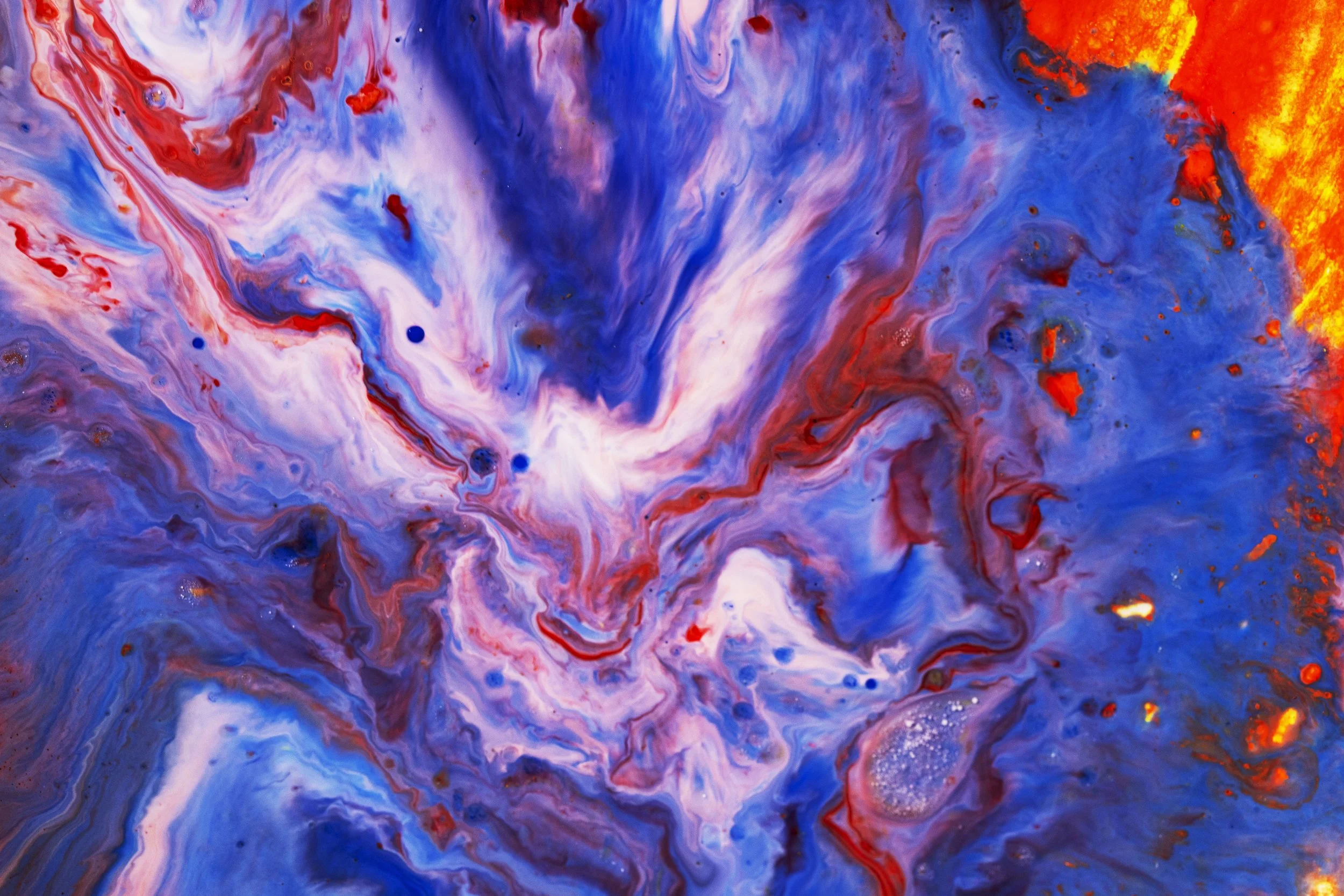
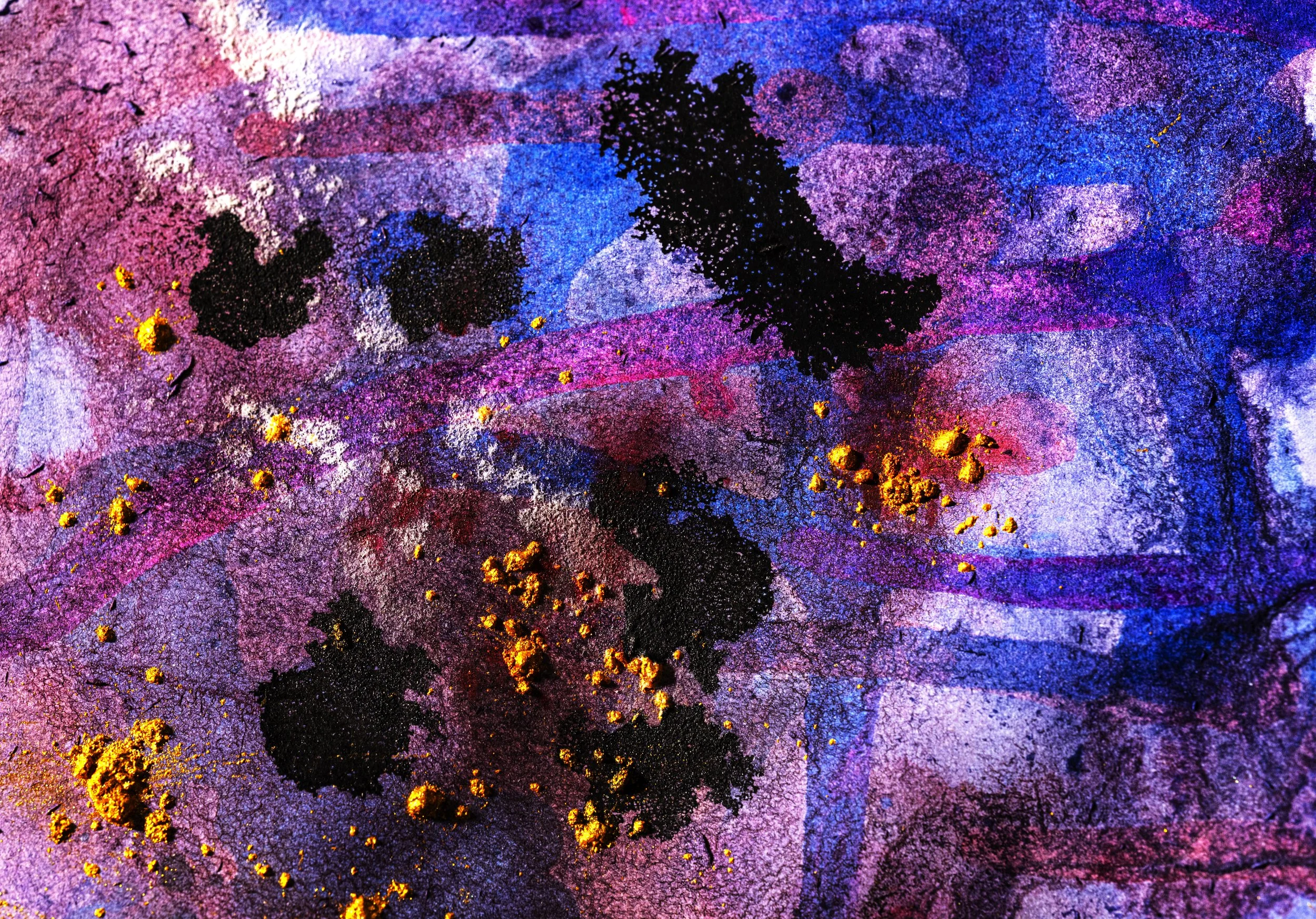
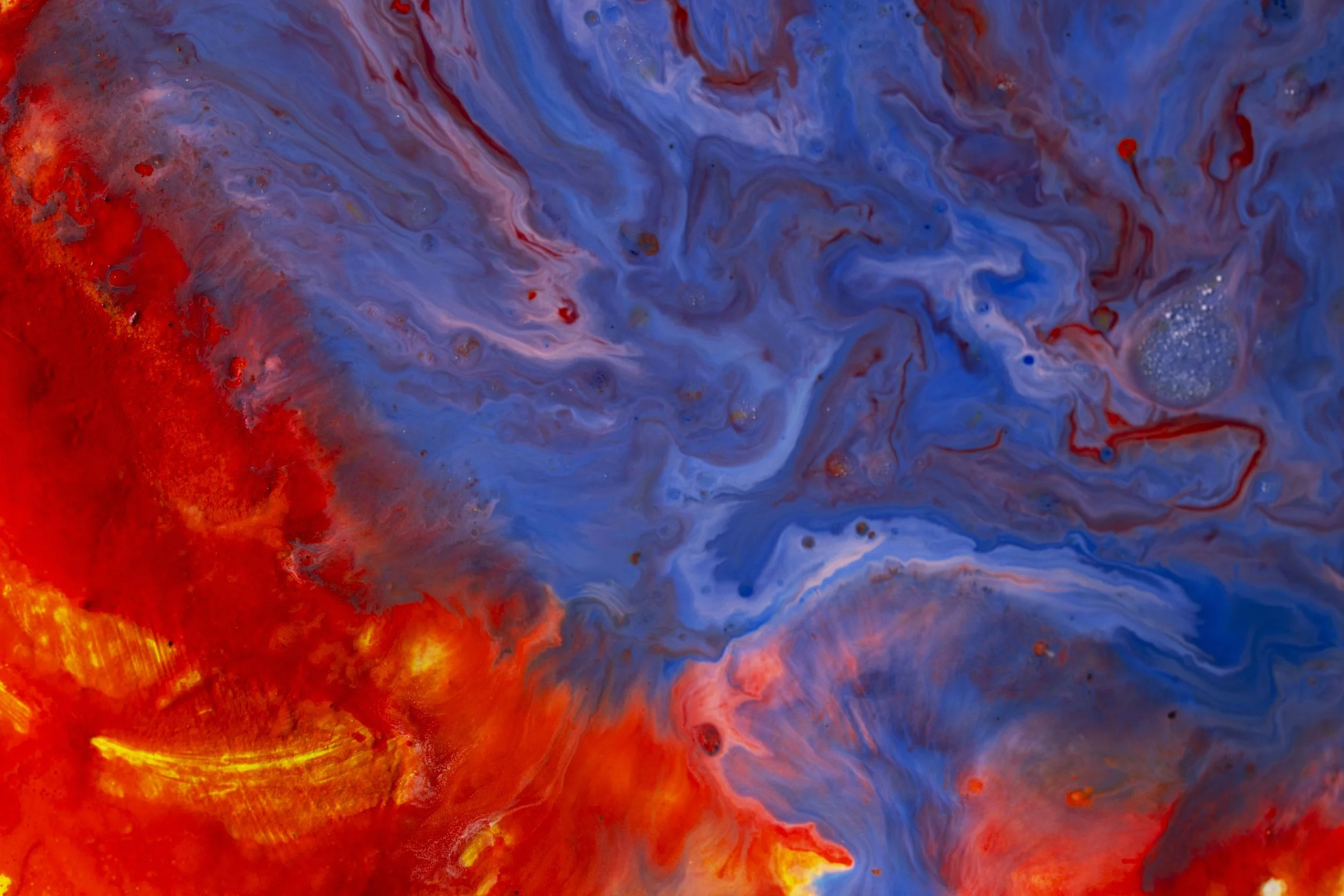
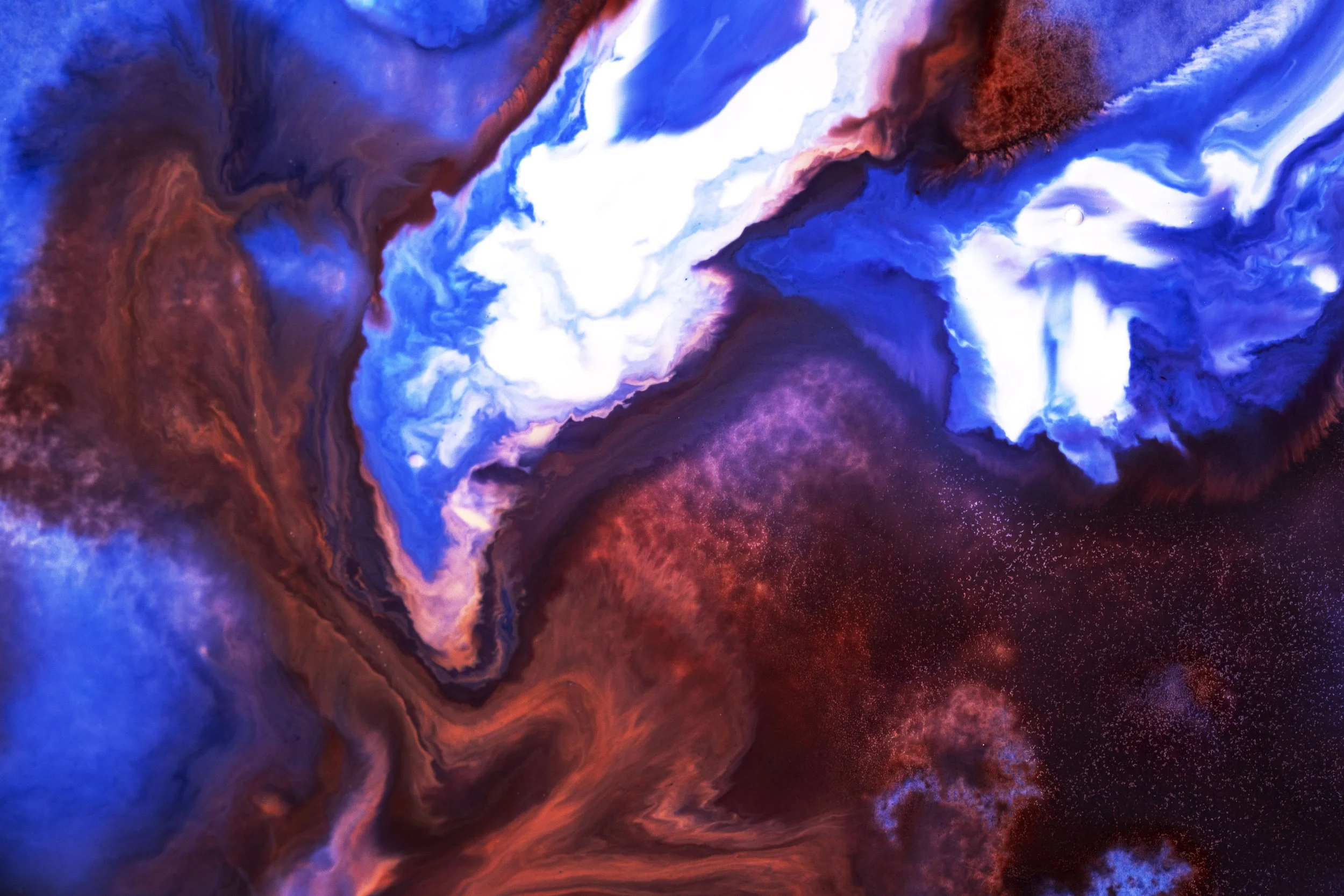
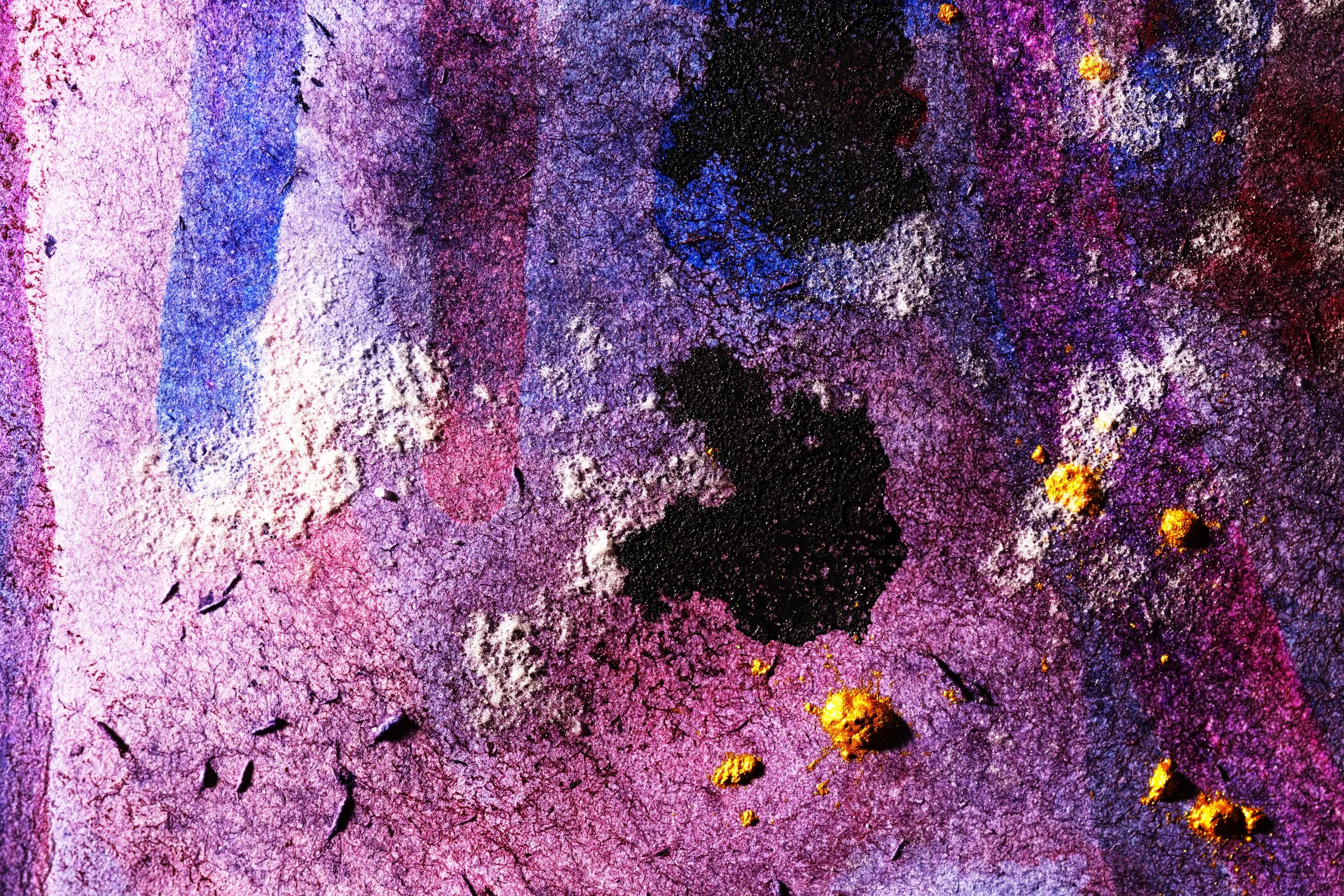
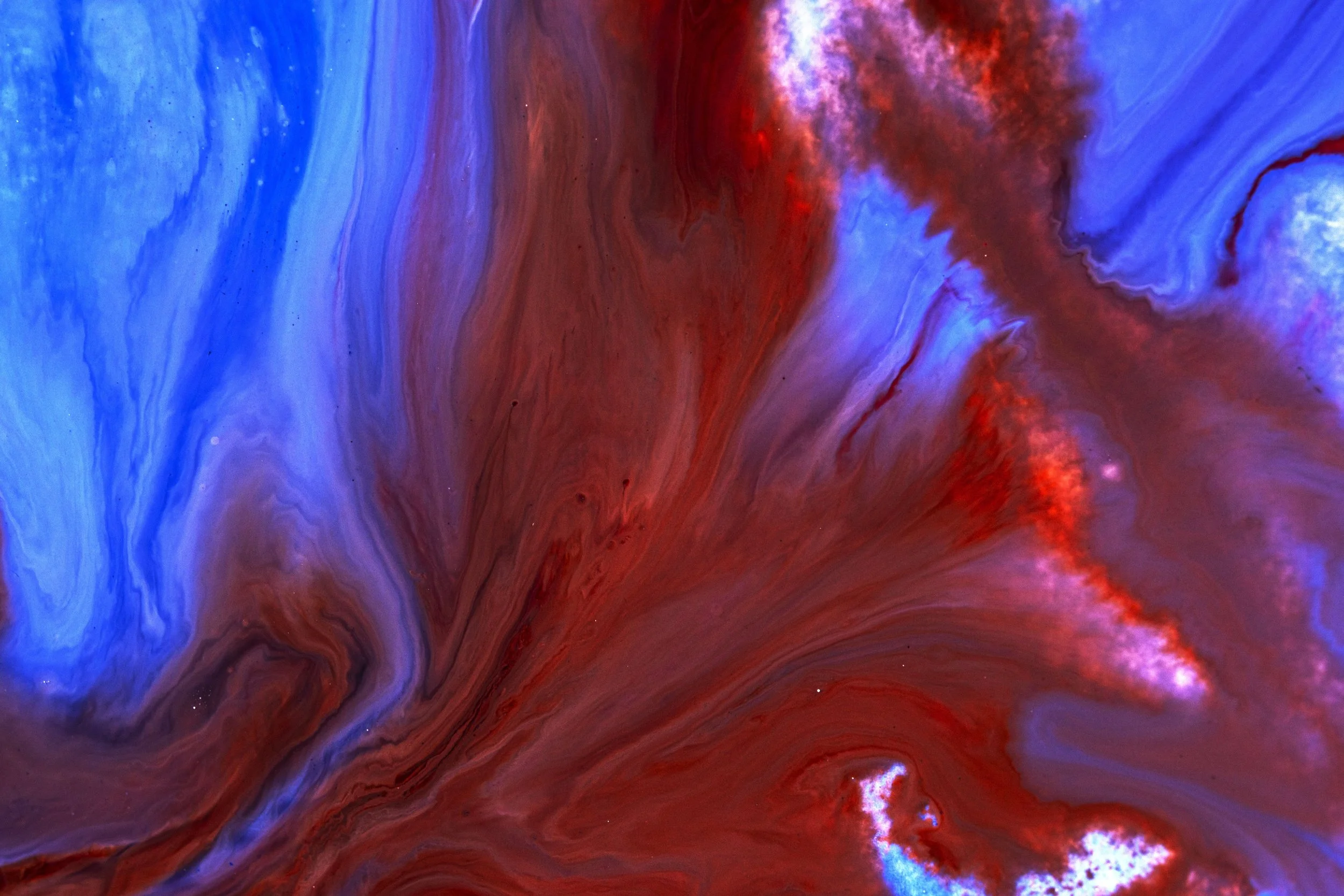
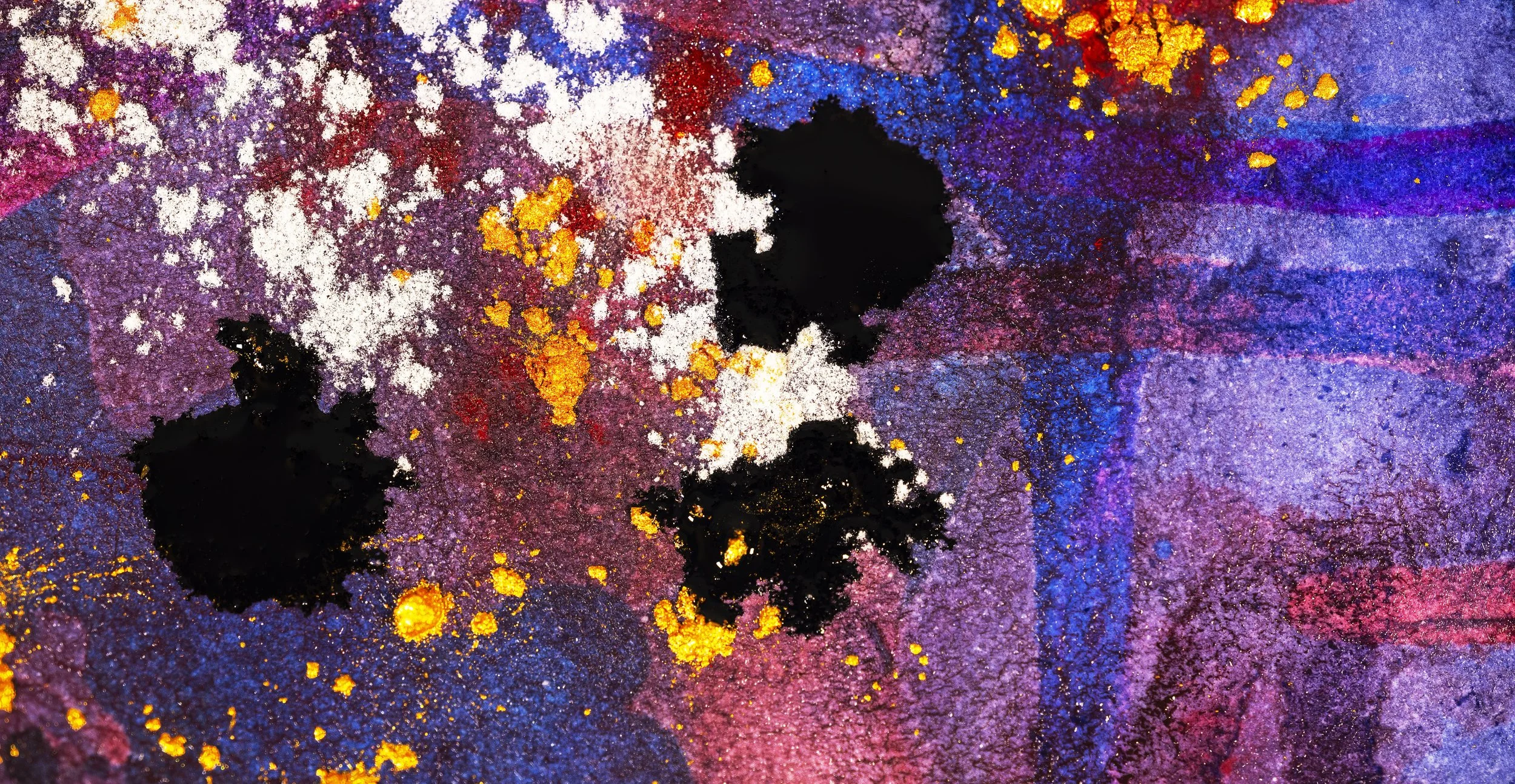
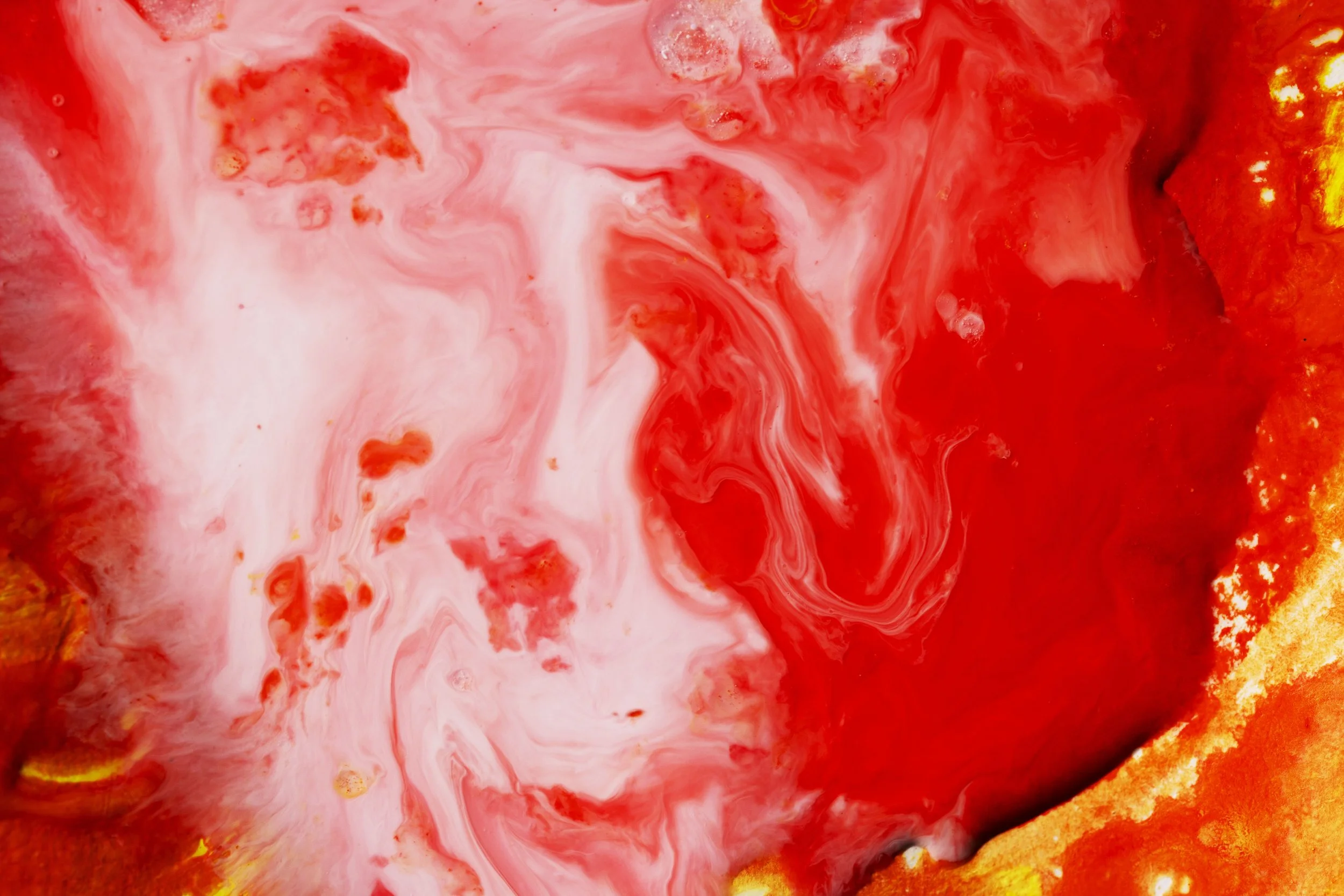
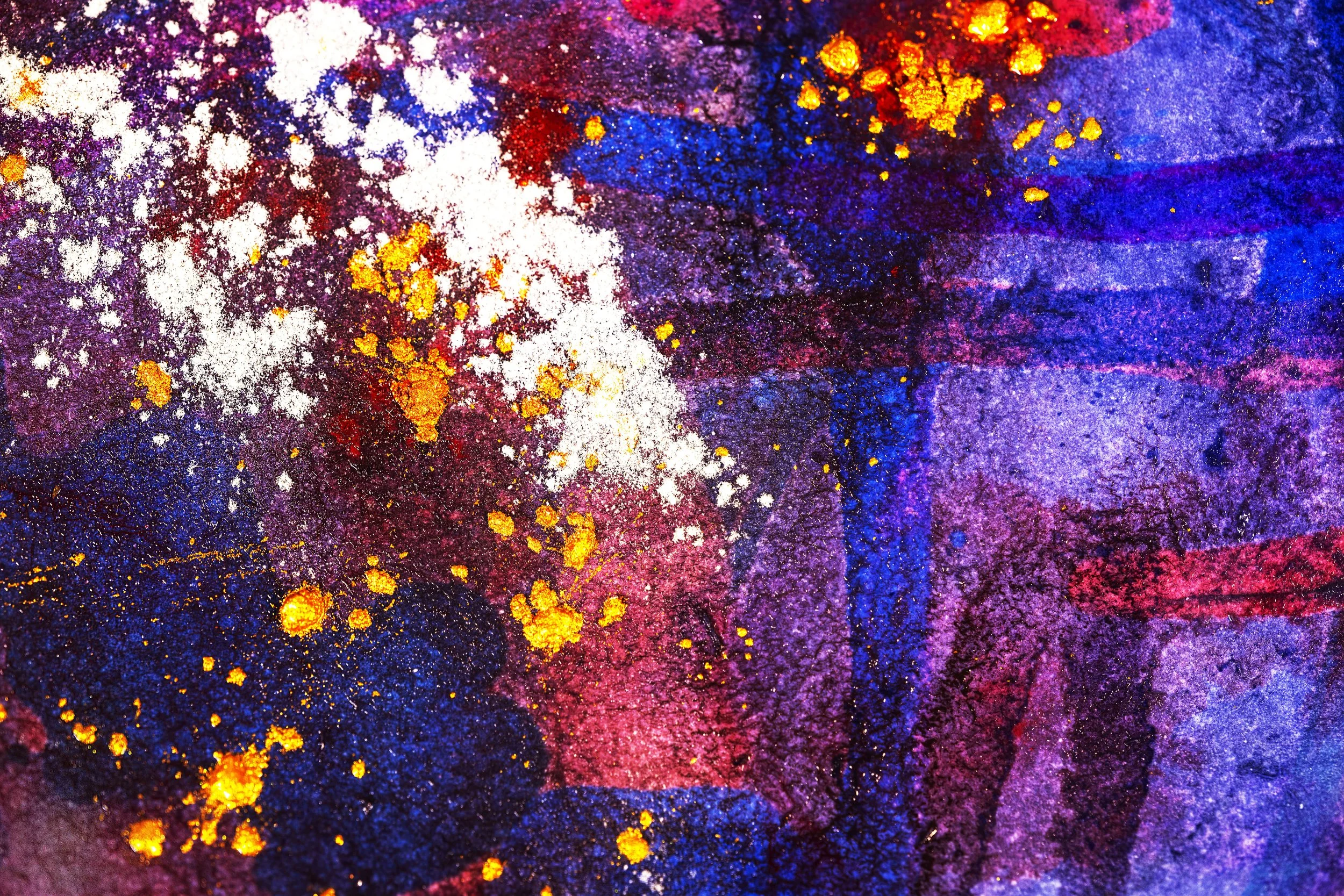
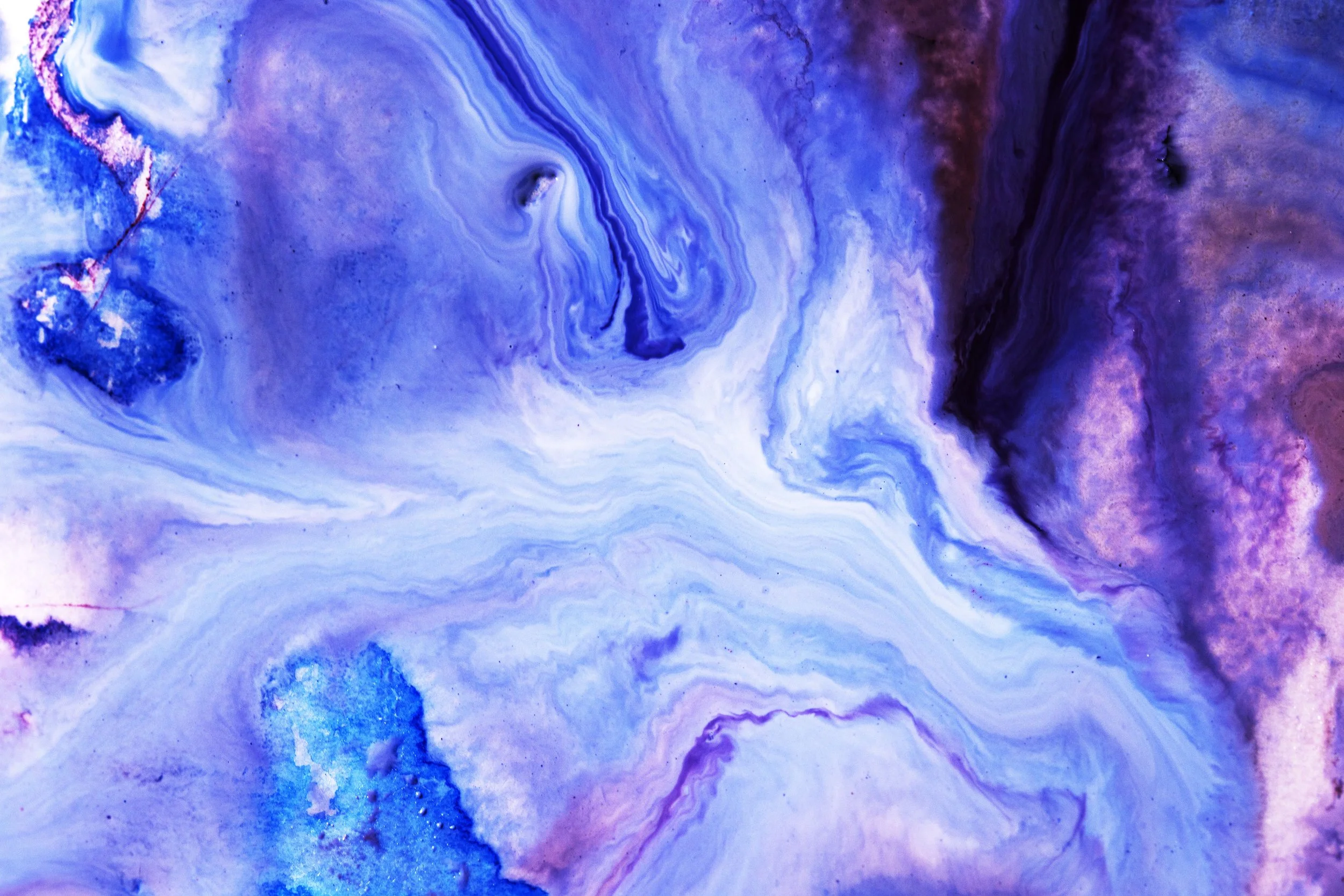
This work begins with the desire to release control. As a student, so much of my life is structured around precision: correct answers, clean arguments, the pressure to turn thought into something defensible. I wanted to make images that resisted that logic. I removed the structures that usually anchor my photography and turned instead toward unstable materials: watercolor and acrylic paint, thinned with water and isopropyl alcohol, poured onto marker paper, which resists absorption and keeps liquid active on the surface where pigment spreads, fractures, and reacts. Once the materials begin to move, the image is no longer something I can fully direct. Chemistry, gravity, evaporation, and accident become collaborators. The transformation of scale allows me to look closely at what I would normally overlook, and in that act of attention, a rupture or dash or trace of movement becomes worthy of study. Each photograph emerges from a negotiation between intention and release. I choose the colors, prepare the mixture, and frame the image, but the final composition depends on forces beyond my control. In school, I am asked to refine, correct, and prove. Here, I am asked to wait, notice, and accept that the most compelling image may come from the moment I stop trying to force one into existence. These photographs are not escapes from discipline, but alternatives to a discipline built on fear, a practice in which a mistake can become a beginning, a stain can become structure, and disorder can reveal its own intelligence.